Agent Ecosystems Under Regulation: How Retailers Prove Compliance Across Multi-Agent Systems
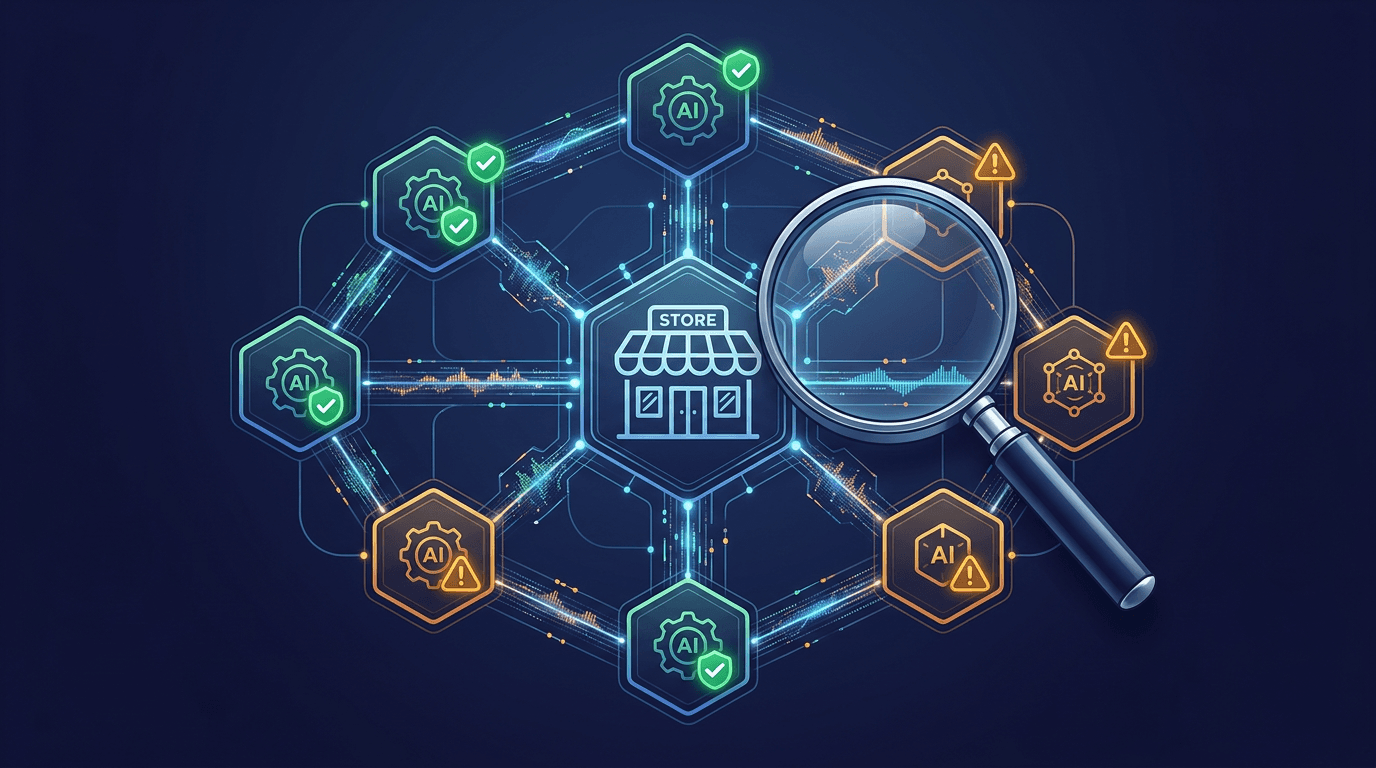
A single agentic commerce transaction can involve five agents from three different providers. Under the EU AI Act, the retailer must demonstrate transparency compliance across all of them. That demands ecosystem-level visibility - not just control of individual agents.
In our previous piece on the EU AI Act and agentic commerce, we outlined the transparency obligations that Article 50 places on AI systems interacting with consumers. The immediate takeaway was clear: AI agents must identify themselves, and the penalties for failing to comply are severe.
But the compliance challenge for retailers goes deeper than any single agent. Agentic commerce is not a one-agent operation. A typical consumer interaction - researching a product, comparing options, placing an order, arranging delivery, handling a return - can involve a chain of AI agents, each operated by a different provider, each with its own identity (or lack of one), each potentially interacting with a natural person at some point in the workflow.
The question the EU AI Act forces retailers to answer is not "does my agent comply?" It is: "can I demonstrate compliance across every agent that touches my customer?"
Mapping the Agent Ecosystem
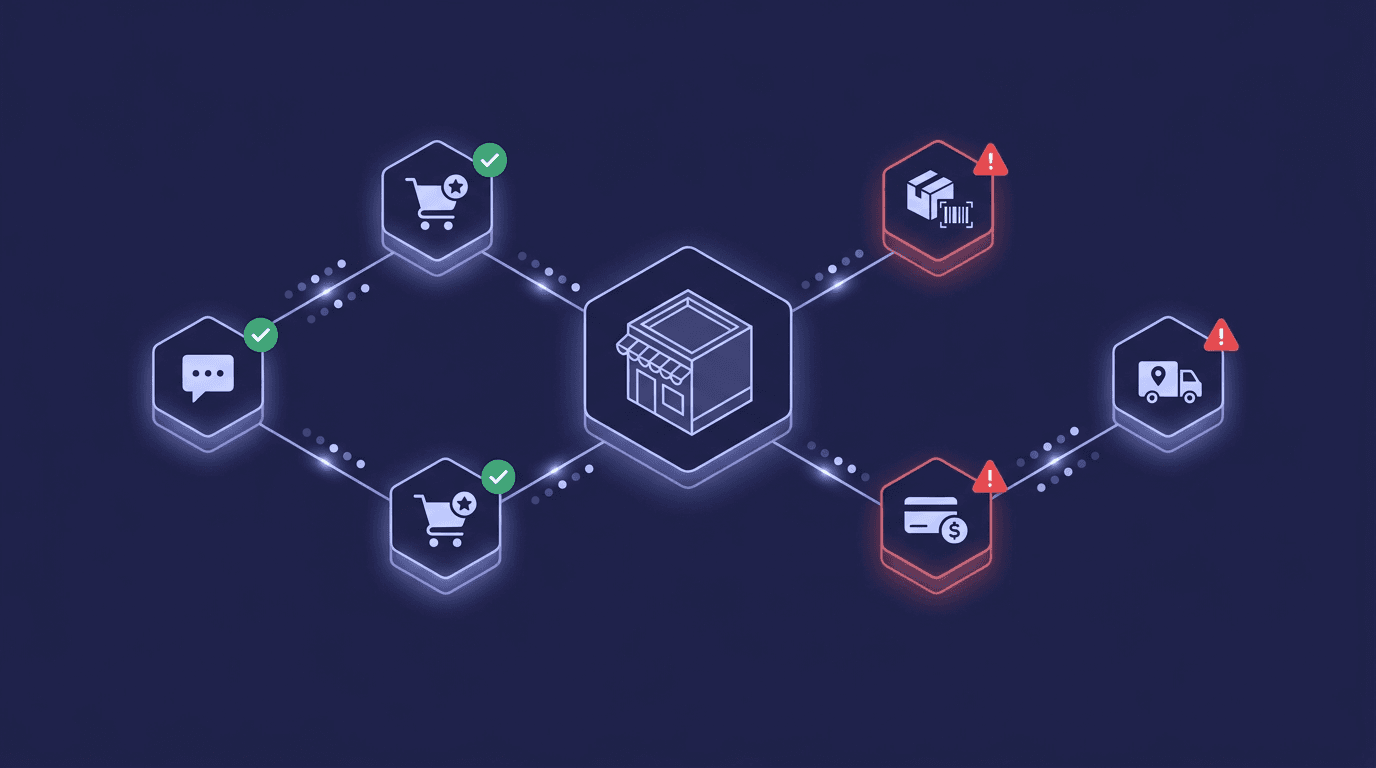
Consider a typical omnichannel retailer's agentic commerce workflow. A consumer's personal AI assistant initiates a product search. The retailer's brand agent responds with product information. A recommendation agent suggests alternatives based on the consumer's preferences. An inventory agent checks stock across warehouses. A payment agent processes the transaction through Stripe or Square. A logistics agent coordinates delivery with a third-party carrier. A customer service agent handles the post-purchase "where is my order?" query.
That is seven agents. Some are operated by the retailer. Some by technology vendors. Some by third-party service providers. The consumer may interact directly with two or three of them. Others operate in the background but generate content - delivery notifications, order confirmations, product descriptions - that the consumer receives.
Three Compliance Gaps in Multi-Agent Retail
Gap 1: No unified view of agent interactions
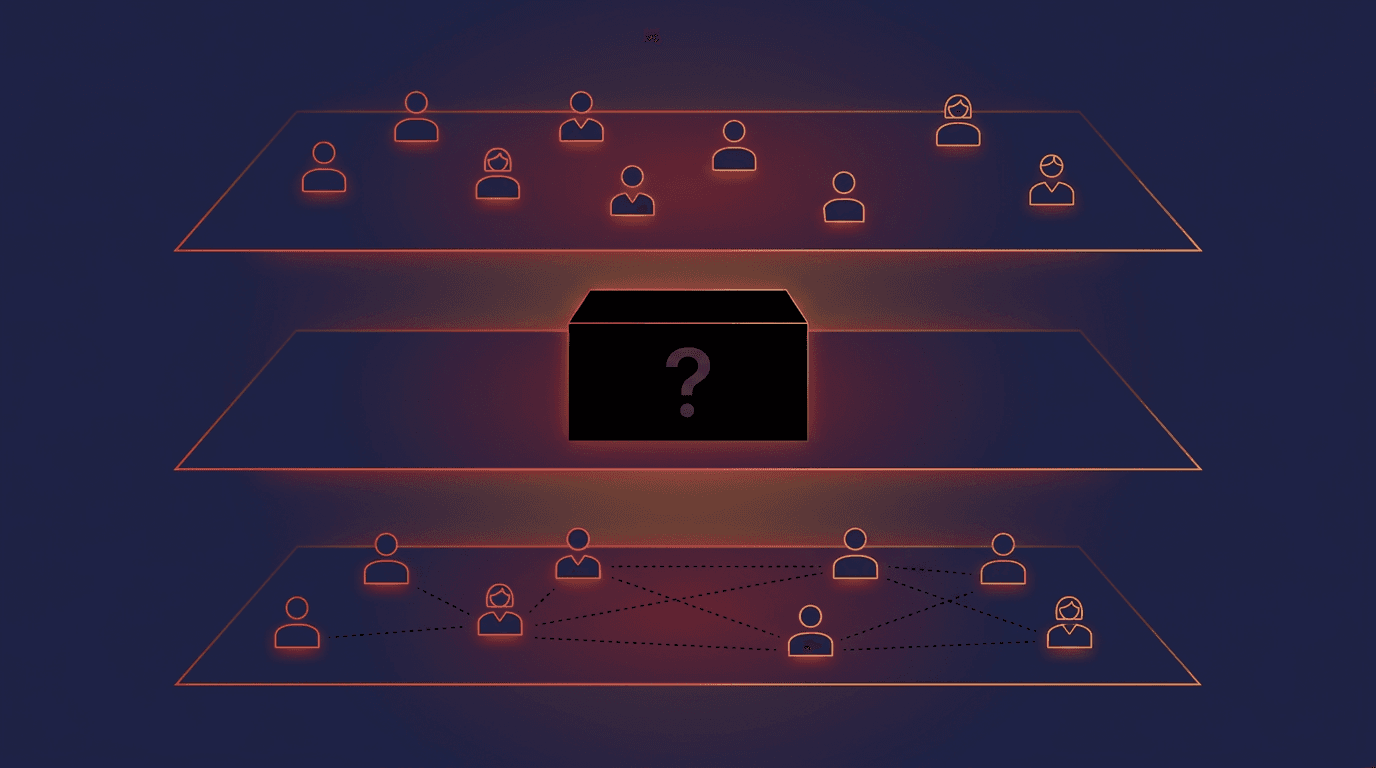
Most retailers today have no single system that tracks every AI agent involved in a consumer interaction. The brand agent logs sit in one system. The payment agent logs sit in Stripe's dashboard. The logistics agent logs sit with the carrier. When a regulator asks 'show me every AI interaction with this consumer,' the retailer has no coherent answer.
Gap 2: Third-party agents operate as black boxes
A retailer may use a third-party AI for product recommendations or dynamic pricing. That agent interacts with consumers on the retailer's behalf. But the retailer often has no visibility into how the agent identifies itself, whether it provides appropriate disclosure, or whether its outputs are marked as AI-generated. The compliance obligation does not disappear because the agent belongs to someone else.
Gap 3: Agent-to-agent interactions are invisible
When the brand agent queries the inventory agent, and the inventory agent queries the warehouse management system, and the result surfaces as a stock availability statement to the consumer - who disclosed what to whom? Without interaction-level traceability across the agent ecosystem, the retailer cannot prove the chain of compliance.
What Ecosystem Compliance Requires
Closing these gaps requires a shift from agent-level compliance to ecosystem-level compliance. The retailer needs four capabilities:
Verified identity for every agent in the chain
Every agent that participates in a consumer interaction - whether owned by the retailer, a vendor, or a third party - must carry a verifiable identity. Not a label. Not a string in a header. A cryptographic credential that can be independently verified.
Interaction-level visibility across providers
The retailer needs a single view of every agent interaction in a consumer workflow, regardless of which provider operates the agent. This includes which agents participated, what was communicated, and whether disclosure was provided.
Auditable records that survive regulatory scrutiny
Log files are not audit trails. A regulator expects verifiable evidence that a specific agent, operated by a specific provider, disclosed its nature to a specific consumer at a specific time. That requires cryptographically verifiable agent identities and interaction records - not application logs that can be modified after the fact.
Contractual enforcement of identity standards
A retailer's compliance posture is only as strong as the weakest agent in the ecosystem. Vendor agreements must require verified agent identity as a condition of participation in the retailer's commerce workflow.
How Verified Agent Infrastructure Solves This
The compliance gaps above all share a single root cause: agents from different organisations have no shared identity infrastructure. The brand agent logs sit in the retailer's system. The payment agent logs sit in Stripe's dashboard. The logistics agent logs sit with the carrier. Each vendor issues its own identifiers that mean nothing outside its own walls. When a regulator asks "show me every agent in this consumer's journey," the retailer is left stitching together unverified exports from five different dashboards - a process that is expensive, error-prone, and carries no cryptographic proof that the data is complete or unaltered.
Fetch AI's Almanac registry exists to close this gap. It is a neutral, on-chain registry where agents from any organisation - the retailer's, the vendor's, the carrier's, the CPG brand's - register with the same cryptographic identity standard. When a retailer needs to answer the regulator's question, every agent in the chain has a verifiable Almanac entry. The identity layer does not need to be assembled retrospectively from disconnected logs. It was there from the first interaction.
Every agent registered, every identity verified
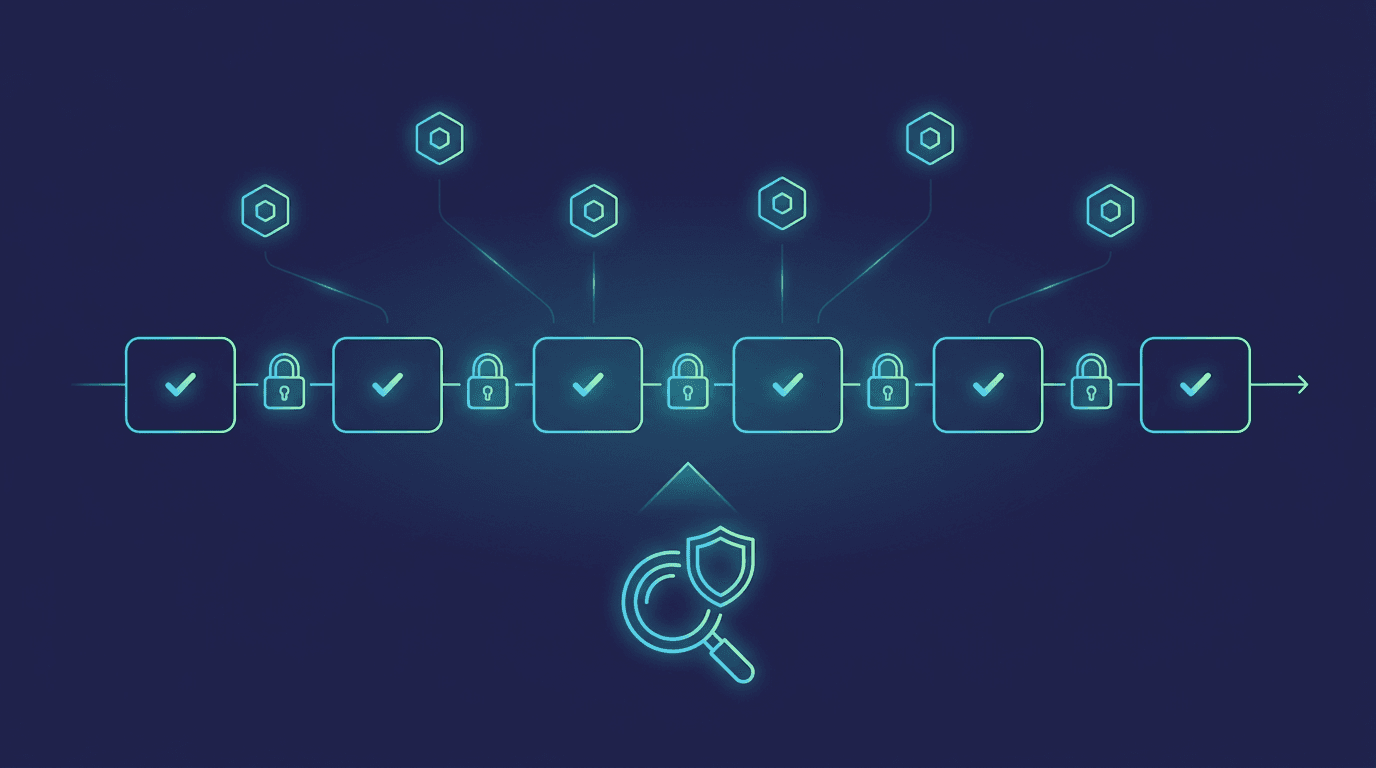
Before any agent participates in a retailer's commerce ecosystem, it registers on the Almanac - an on-chain registry - with a cryptographically signed identity. The retailer can verify that every agent in the chain is who it claims to be and is operated by the organisation it claims. Because the Almanac is a neutral, third-party registry, this verification works across organisational boundaries without bilateral trust agreements.
Identity infrastructure that enables cross-boundary traceability
Because every agent in the ecosystem is identified by its Almanac-registered address, interactions across organisational boundaries are attributable. The retailer can build audit trails on top of verified agent identities rather than stitching together unverified logs from disconnected systems. The identity layer is the foundation - traceability follows from it.
Third-party compliance becomes verifiable
When a third-party agent requests access to the retailer's ecosystem, the Almanac check happens automatically. Unverified agents are not rejected by policy - they are rejected by the protocol. The retailer's compliance surface is protected by architecture, not by contract terms alone.
The identity layer regulators will ask for
When a regulator asks "show me that every AI system in this consumer's purchase journey disclosed its nature," the first requirement is knowing who participated. Every agent registered on the Almanac has a cryptographically verifiable identity that can be independently confirmed. This is the foundation for regulatory evidence - verifiable identity at every node in the interaction chain, not a spreadsheet compiled after the fact.
The Cost of Waiting
Retailers that build agentic commerce workflows today without ecosystem-level identity infrastructure will face a binary choice when enforcement begins in August 2026: retrofit verified identity onto every agent in the chain, or accept the compliance risk.
Retrofit is the more expensive option in every dimension - engineering time, operational disruption, and the risk that the retrofit produces an audit trail that a regulator considers insufficient because it was constructed retroactively rather than captured in real time.
Building with verified agent infrastructure from the start eliminates this dilemma. The cross-organisational identity problem - the reason a retailer cannot simply "control" compliance across agents it does not operate - is solved at the infrastructure level. Every agent, regardless of operator, registers on the same neutral Almanac. When a new vendor's agent enters the ecosystem, it does not require a new bilateral integration. It registers on the Almanac, and every other agent in the ecosystem can verify it immediately. The retailer's compliance surface does not grow with the number of third-party agents - it remains the same: one integration, one registry, one identity standard.
Verified identity across your entire agent ecosystem
Your compliance surface grows with every third-party agent in the chain. The Almanac makes every one of them verifiable against the same neutral registry - regardless of who operates them, where they are based, or what system they run on.
Joe Hurst - Chief Revenue Officer
Joe.Hurst@fetch.ai