
The Compliance Advantage: How Verified Agent Infrastructure Becomes a Competitive Moat
This is the final piece in our series on the EU AI Act and agentic commerce. The conclusion is counterintuitive: the organisations that treat compliance as an investment rather than a cost will build structural advantages in trust, discoverability, and ecosystem access that late movers cannot replicate.
Across this series, we have examined how the EU AI Act's transparency obligations affect retailers, multi-agent ecosystems, and manufacturing supply chains. The common thread is clear: the regulation requires AI systems to identify themselves, and enforcement is coming in August 2026 with penalties that are significant enough to change commercial behaviour.
Most businesses are treating this as a compliance problem. Something to solve, contain, and budget for. A cost of doing business in the EU.
That framing is wrong. The businesses that understand what verified agent infrastructure creates - beyond compliance - are building competitive advantages that compound over time and become structurally difficult for late movers to match.
Compliance Creates Trust. Trust Creates Preference.
When a consumer's AI assistant evaluates two brands - one with a verified, cryptographically attested agent identity registered on the Almanac, and one with no verifiable credentials - the choice is not close. The verified brand is engaged. The unverified brand is skipped. Not deprioritised. Skipped. An AI agent that cannot verify who it is talking to will not route the consumer there.
This is not a theoretical future state. Visa built the Trusted Agent Protocol specifically because merchants needed a way to distinguish legitimate AI agents from bots. AI-driven traffic to US retail websites increased 4,700% year-over-year. The agents driving that traffic are being built to evaluate trust signals before engaging. A verified Almanac identity is not a nice credential to have. It is the difference between being found and being invisible. The EU AI Act, by requiring transparency infrastructure, is accelerating the creation of this trust layer. The organisations that register first are the ones the agent economy finds first. The ones that wait are not late - they are absent.
Four Structural Advantages of Early Investment
Discoverability advantage
The Almanac is the registry that AI agents search to find trusted counterparts. Consumer AI assistants looking for a retailer, enterprise procurement agents looking for a supplier, logistics systems looking for a carrier - they all query the same registry. If your agent is registered, you are discoverable by the entire ecosystem. If you are not registered, you do not appear. There is no search penalty. There is no ranking. You are simply not there.
Ecosystem access advantage
As retailers require verified agent identity from suppliers, and suppliers require it from logistics providers, and logistics providers require it from carriers, the ecosystem becomes gated by identity. Each new participant that registers on the Almanac makes the ecosystem more valuable for every existing participant. Each organisation that stays outside loses access to every organisation inside. This is a network effect. Early registration means access to the network as it grows. Late registration means joining after your competitors have already established themselves as the trusted nodes.
Trust history advantage
A verified agent with an established Almanac registration and a track record of participating in legitimate, transparent interactions carries trust that no new entrant can replicate from a standing start. Organisations that build this reputation early accumulate a competitive asset that compounds - the longer the agent has been verified and active, the more the ecosystem trusts it.
Regulatory positioning advantage
When the enforcement window opens in August 2026, organisations with verified agent infrastructure will have evidence of proactive compliance. Regulators, in every jurisdiction, treat proactive compliance differently from reactive remediation. The organisational posture matters.
The Moat Deepens Over Time
There is a pattern in digital infrastructure that repeats. Stripe became the default payment layer not because it was first, but because once merchants integrated, their payment credentials, customer data, and transaction history accumulated on Stripe's infrastructure. Switching became progressively harder. Plaid became the default financial connectivity layer for the same reason - once banks and fintech apps connected through Plaid, the network effect made alternatives irrelevant. The Almanac follows the same structural logic. Once an organisation's agents are registered, their identity is established, their interactions are attributable, and their trust history is accumulating. Every new participant that registers makes the registry more valuable. Every month of inaction makes the catch-up harder.
Consider the concrete position of a retailer that registers on the Almanac today versus one that waits until August 2026:
- Verified agent identity established, trust history accumulating
- Discoverable in agent registries, consumer AI assistants routing traffic
- Supply chain partners onboarding onto verified ecosystem
- Audit trail growing with every interaction
- Proactive compliance posture documented
- Scrambling to deploy verified identity under regulatory pressure
- No trust history - zero interactions on record
- Competitors already established as trusted ecosystem nodes
- Supply chain partners already aligned with early movers
- Reactive compliance posture - higher scrutiny from regulators
The gap between these two positions widens every day. The early mover accumulates trust history, ecosystem connections, and regulatory goodwill. The late mover starts from zero in all three dimensions, competing against organisations whose head start is structural, not just temporal.

Beyond the EU: The Regulatory Direction of Travel
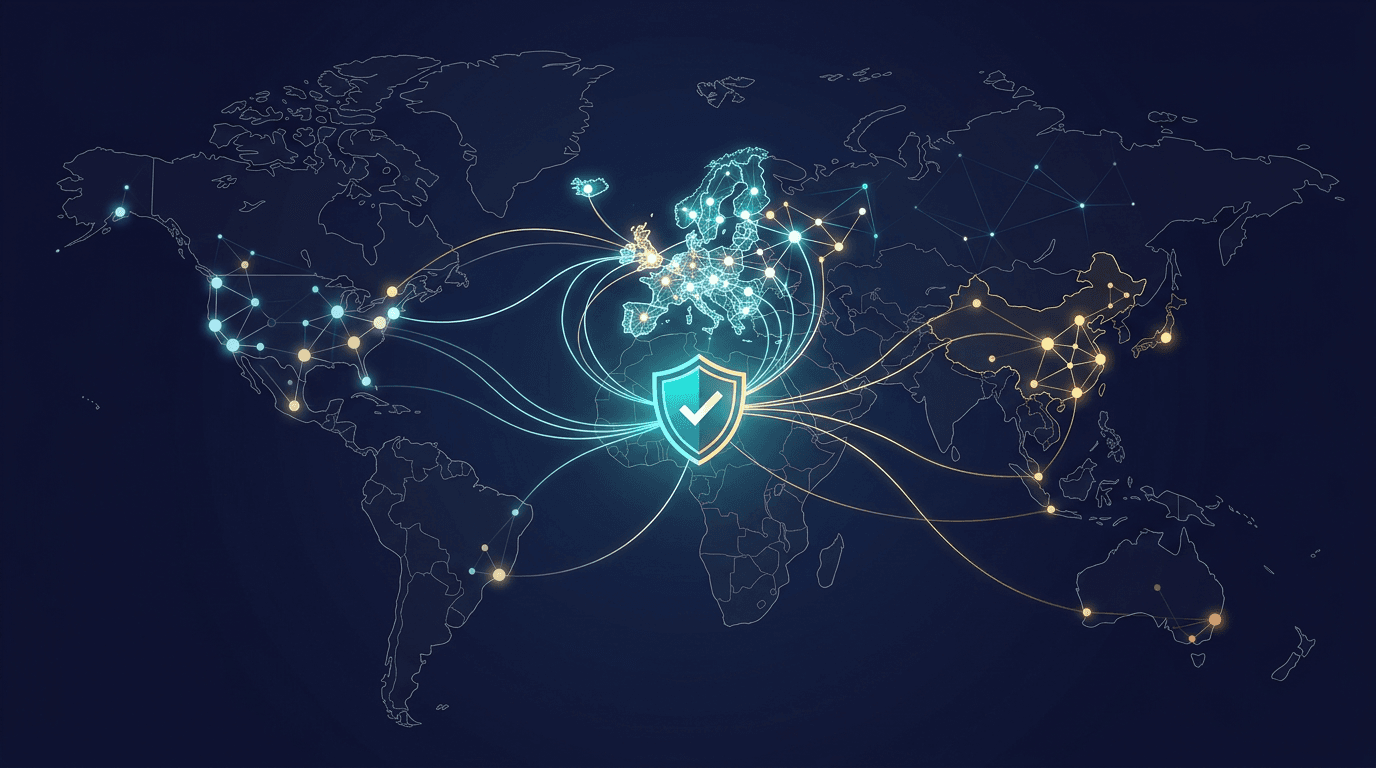
The EU AI Act is the first comprehensive AI regulation, but it will not be the last. The UK is evaluating AI governance approaches, including regulatory sandboxes and sector-specific oversight. The US is advancing AI governance through executive orders and agency-level guidance. China has already implemented AI transparency requirements, including mandatory labelling of AI-generated content under its Deep Synthesis regulations (effective January 2023) and algorithmic transparency rules. The regulatory direction of travel is global, and it points towards the same outcome: AI systems must be identifiable, their interactions must be traceable, and the organisations that deploy them must be accountable.
Organisations that build verified agent infrastructure for EU AI Act compliance are not building for a single regulation. They are building for the regulatory environment of the next decade. The infrastructure that satisfies Article 50 today will satisfy equivalent requirements in other jurisdictions tomorrow - because the underlying principle is universal: AI systems that interact with people must be transparent about what they are.
The Decision
The EU AI Act has set the terms. AI agents must identify themselves. Multi-agent ecosystems must be transparent. Organisations must be able to demonstrate compliance across every agent that directly interacts with a consumer, a worker, or a business partner.
The businesses that treat this as an investment - in trust, in discoverability, in ecosystem access, in regulatory positioning - will build advantages that compound over time. The businesses that treat it as a cost to be minimised will find themselves competing against organisations whose trust infrastructure is deeper, whose ecosystem connections are stronger, and whose regulatory position is more credible.
The compliance advantage is real. It is structural. And it is available now. One Almanac registration makes your agents verifiable by every participant in the ecosystem - every retailer, every supplier, every consumer AI assistant, every regulator. The organisations that register before August 2026 will be the trusted nodes the agent economy is built around. The ones that do not will be asking permission to join an ecosystem that was built without them.
The full series
- The EU AI Act and Agentic Commerce: Why Your AI Agents Must Identify Themselves
- Agent Ecosystems Under Regulation: How Retailers Prove Compliance Across Multi-Agent Systems
- From Factory Floor to Checkout: Why Manufacturing Needs Verified Agent Identity
- The Compliance Advantage: How Verified Agent Infrastructure Becomes a Competitive Moat (this article)
Build your compliance advantage now
August 2026 is five months away. One Almanac registration. Every agent in your ecosystem verifiable. Every external agent that finds you, verified. Every regulator question answerable. The organisations that register now are building the trust infrastructure the agent economy runs on. The ones that wait will be trying to join an ecosystem that already decided who it trusts.
Joe Hurst - Chief Revenue Officer
Joe.Hurst@fetch.ai